

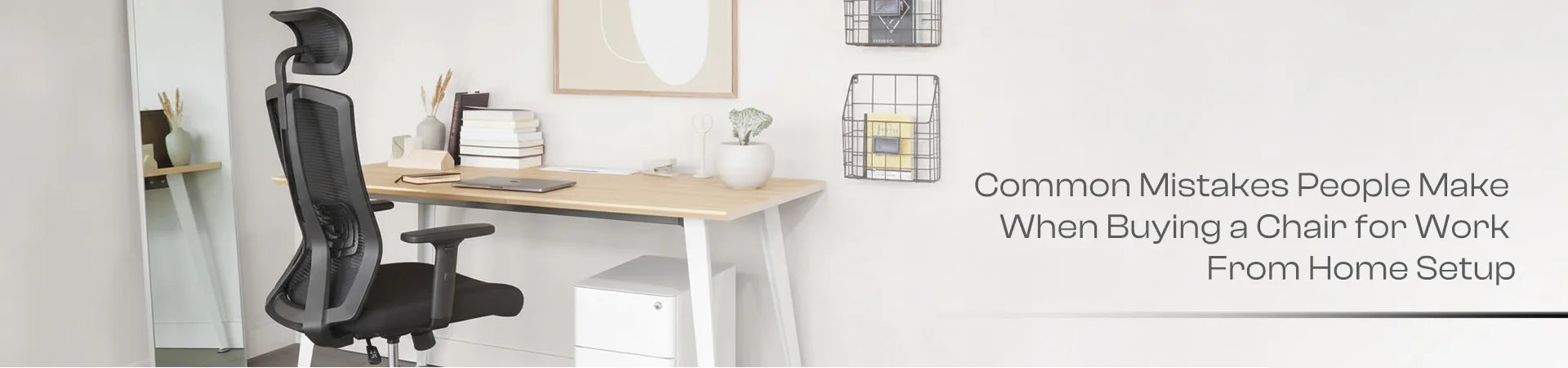
Working from home often begins with a simple setup.
A desk, a chair, and the intention to stay productive.
But after a few weeks, small discomforts start to show up.
You shift more often. Your back feels tired. Sitting for long hours becomes harder than expected.
In many cases, the problem is not your routine.
It is the chair you chose.
Choosing the right work from home chairs is less about quick comfort and more about long-term support.
Choosing Based Only on Looks
It is easy to pick a chair that fits your space visually.
Something minimal, modern, or stylish.
But appearance alone does not guarantee comfort.
Many people end up with a chair that looks right but does not support how they sit and work. Over time, this creates strain and distraction.
A good chair should feel as right as it looks.
Ignoring Support and Posture
One of the most common mistakes is overlooking how the chair supports your body.
A regular desk chair may work for short durations, but work from home setups often demand longer sitting hours.
Without proper support:
- Your lower back starts to tire
- Your shoulders tighten
- Your posture slowly shifts without you noticing
This is where an ergonomic chair becomes important. It supports your natural posture so your body does not have to compensate.
Assuming Soft Means Comfortable
Soft seating feels comfortable at first.
But over time, it can lead to poor support.
When a chair is too soft:
- You sink into the seat
- Your posture collapses
- Your body works harder to stay balanced
True comfort comes from support, not just cushioning.
Not Considering Your Workspace Setup
Your chair is part of a larger setup, not a standalone piece.
Many people overlook:
- Desk height
- Available space
- How freely they can move
A chair that does not fit your setup can feel awkward, no matter how comfortable it seemed initially.
The right choice should align with both your body and your environment.
Overlooking Adjustability
Your sitting position changes throughout the day.
Your chair should be able to adjust with you.
Simple features like height adjustment and flexible movement can make a noticeable difference.
Without them, you end up adjusting your body instead of the chair.
Sitting Too Long Without Movement
Even the best chair cannot replace movement.
Staying in one position for too long leads to stiffness and fatigue.
A good chair supports your posture, but your body still needs regular movement.
Small breaks and posture shifts help maintain comfort throughout the day.
Buying Without Thinking Long Term
A chair may feel fine on the first day.
But the real test is how it feels after weeks of use.
When choosing among different work from home chairs, think beyond the initial impression.
Ask yourself:
- Will this support long hours of work?
- Will I need to keep adjusting my position?
- Does it reduce strain over time?
Long-term ease matters more than short-term comfort.
Choosing Without Understanding Your Work Style
Everyone works differently.
Some people sit for extended periods.
Others move frequently between tasks.
Your chair should support how you work, not restrict it.
The more your chair aligns with your routine, the more natural your workday feels.
What Should You Do Instead
If you want to make a better choice, keep it simple:
- Focus on how the chair supports your posture
- Make sure it fits your workspace
- Look for flexibility and ease of movement
- Think about long-term comfort, not just the first impression
Most importantly, notice how your body feels after a few hours of sitting.
How Bezomè Fits Into Your Work From Home Setup
At Bezomè, chairs are designed to support both your body and your space.
The idea is not just to create office seating, but to create balance.
Between comfort and design. Between work and ease.
Each chair is built to adapt to your posture while blending naturally into your environment, so your workspace feels more complete and easier to spend time in.
Closing Thought
The right work from home chairs does not demand attention.
They support you quietly.
No constant shifting.
No growing discomfort throughout the day.
Just a workspace that feels easier to sit in, and easier to work from.


