

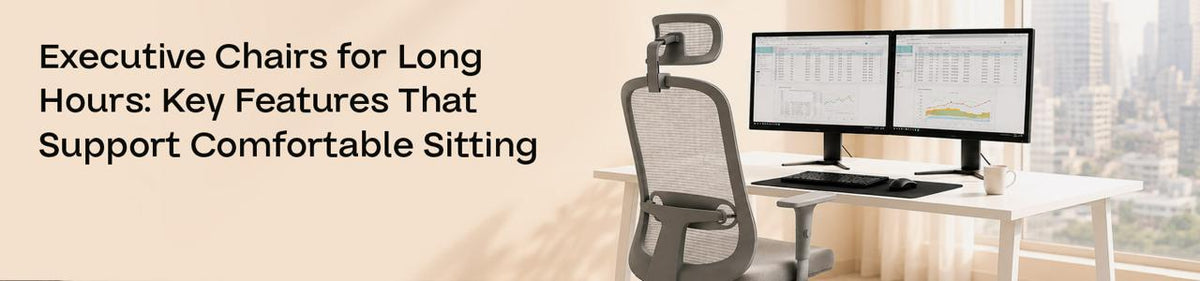
An executive chair built for long hours needs six core features: adjustable lumbar support, a supportive headrest, high density cushioning, multi point adjustability (seat height, armrests, recline), breathable upholstery, and a stable, wide base with smooth casters. Together, these features reduce the back, neck, and hip strain that builds up during extended sitting sessions.
If your workday stretches past eight hours, your chair is the one piece of equipment you're in constant contact with, longer than your laptop, your desk, or your coffee cup. An executive chair is designed for exactly this kind of demand: long, uninterrupted hours of focused work, back to back meetings, and sustained sitting that ordinary chairs are not built to handle. Not every chair marketed as "executive" actually delivers on this. Here is what genuinely matters.
1. Lumbar Support That Matches Your Spine's Natural Curve
Contoured, adjustable padding that fills the natural inward curve of your lower back.
Lower back discomfort is the most common complaint from long hours of sitting. Without proper lumbar support, your lower back muscles work continuously just to hold you upright, and this leads to fatigue and stiffness over the course of a day. Effective lumbar support is either built into the ergonomic shape of the backrest or independently adjustable, so it can be positioned to fit different body frames.
2. A Headrest That Actually Supports Your Neck
A cushioned rest positioned to support the neck and upper cervical spine during recline.
Many chairs include a headrest as a design element rather than a functional one. On a chair meant for long sitting sessions, the headrest should reduce strain in the neck and shoulders that builds up from hours of forward leaning posture at a screen. This support becomes noticeable during pauses, calls, or moments of rest between tasks.
3. Deep, Supportive Cushioning
High density foam that holds its shape under sustained pressure, rather than compressing or flattening.
A chair can feel soft in a showroom and still become uncomfortable within a few hours of real use. Cushioning that is too soft compresses quickly and stops supporting body weight evenly, increasing pressure on the hips and thighs. Cushioning that is too firm creates pressure points in the same areas. The right balance, firm enough to support and cushioned enough to feel effortless, is what separates an executive chair from a standard task chair.
4. Adjustability That Fits the User
Controls that let the chair adapt to different body types and sitting positions.
At minimum, a chair built for extended use should offer:
- Seat height adjustment, so the feet stay flat and the knees form a natural angle
- Armrest adjustment, so the shoulders can relax instead of hunching or reaching
- Recline and tilt tension control, so posture can shift through the day instead of staying fixed
Comfort over long hours depends less on finding one perfect fixed position and more on being able to move and readjust without losing support. Chairs with limited adjustability tend to feel fine for the first hour and noticeably worse by the sixth.
5. Breathable, Durable Materials
Ventilated upholstery (mesh or breathable fabric) combined with materials tested for safety and durability.
Sitting for long stretches generates heat, and materials that trap it add to fatigue. Breathable upholstery helps regulate temperature so the body is not shifting uncomfortably through the afternoon. Materials certified for low chemical emissions and tested against recognised safety and durability standards, such as GREENGUARD certification and BIFMA compliance, indicate a chair built for years of daily use rather than short term appearance.
6. A Stable, Well Engineered Base
A wide base and smooth rolling casters that keep the chair steady during movement.
The base and casters directly affect how secure a chair feels through hours of use, including rolling back from the desk, swivelling toward a colleague, or shifting weight during a call. A stable base prevents the wobbling that becomes noticeable during extended sitting.
Key Takeaways
- Long hours of sitting require adjustable lumbar support, not just a padded backrest.
- A functional headrest reduces neck and shoulder strain during recline.
- Cushioning should stay firm and supportive over time, not just feel soft initially.
- Adjustability (seat height, armrests, recline) matters more over a full day than a single fixed comfortable position.
- Breathable, certified materials support both comfort and long term durability.
- A stable base and casters are essential for chairs used for extended, active work sessions.
Choosing a Chair Built for the Long Day
A chair engineered for long hours does not need extra features to prove its value. It simply allows a full day of work without the body signalling discomfort hour after hour. The distinguishing features are consistent: contoured lumbar support, a functional headrest, cushioning that holds its shape, multi point adjustability, breathable certified materials, and a stable base.
At Bezomè, this thinking guides the design of every executive chair we make: support that works with the body through the full length of the day, not just the first hour of it.


