

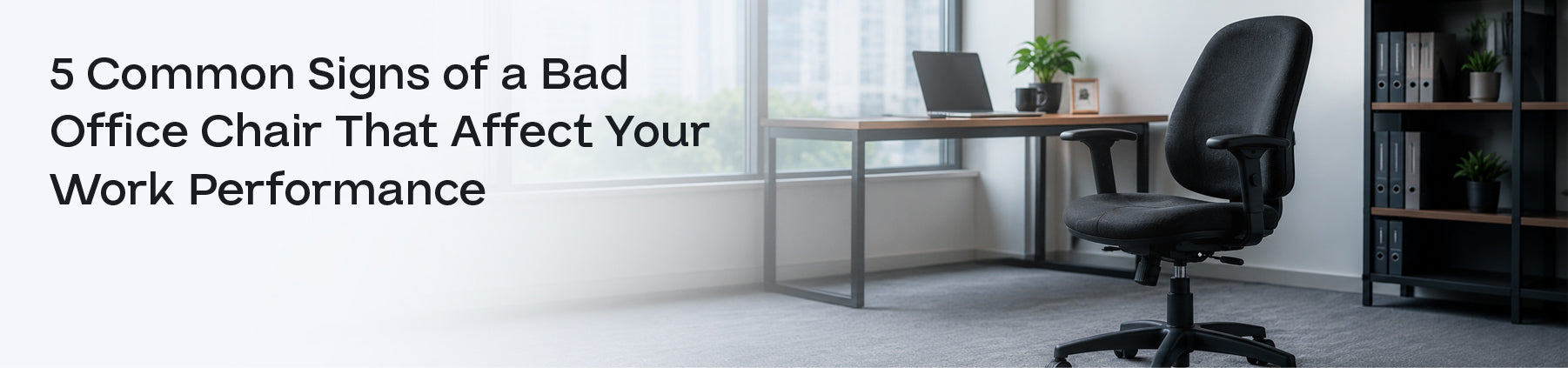
Quick Answer: The most common signs of a bad office chair include poor lower-back support, an uncomfortable seat, limited adjustability, unstable armrests, and frequent discomfort during work. These problems can affect posture, concentration, movement, and overall productivity, especially when you sit for several hours each day.
Introduction
Your office chair may look fine, yet still leave you feeling tired, distracted, or uncomfortable by the afternoon. Many people adjust their posture repeatedly without realising that the chair itself may be the problem.
Recognising the signs of a bad office chair can help you improve your sitting setup before discomfort becomes part of your daily work routine.
What Is a Bad Office Chair?
A bad office chair is not simply an old or inexpensive chair. It is any chair that does not provide suitable support, comfort, or adjustability for your body and working habits.
A chair may work well for one person but feel unsuitable for another. Your height, desk position, sitting duration, and preferred posture all influence how supportive a chair feels.
Why Does Poor Office Chair Support Happen?
Poor support often happens when a chair has a fixed design that cannot adapt to the user. A seat may be too deep, the backrest may not follow the natural curve of the back, or the chair may sit too high for the feet to rest comfortably.
Long working hours can make these small problems more noticeable. Leaning towards a laptop, sitting without breaks, or using a chair designed for occasional use may also increase discomfort.
How Can You Solve It?
Start by looking for these five common warning signs:
-
You Keep Changing Your Sitting Position
Frequent shifting may mean the chair is not distributing your weight comfortably. -
Your Lower Back Feels Unsupported
A large gap between your back and the backrest may encourage slouching or leaning forward. -
Your Feet Do Not Rest Flat
When the chair is too high, pressure may build under the thighs. When it is too low, the knees may sit above the hips. -
The Seat Feels Hard or Uneven
A worn or poorly shaped seat can become uncomfortable during long work sessions. -
The Chair Has Limited Adjustability
A chair without useful height, backrest, or armrest adjustments may not suit your desk or body proportions.
Best Practices
Adjust the chair so your feet rest firmly on the floor and your knees remain close to a right angle. Keep your screen near eye level and your keyboard within easy reach.
Take short movement breaks throughout the day. Even a supportive chair cannot replace regular standing, stretching, and walking.
Common Mistakes
One common mistake is choosing a chair only by appearance. A stylish chair may still lack practical support.
Another mistake is adding several cushions without checking whether they improve your alignment. Too much padding can push the body forward or raise the sitting position unnecessarily.
Expert Insights
Comfort should feel steady rather than overly soft. A good working setup supports your body without forcing you into one rigid position.
Pay attention to how you feel after thirty minutes, not only when you first sit down. Gradual discomfort, repeated leaning, or difficulty concentrating may indicate that your chair needs adjustment or additional support.
Product Recommendations
A complete chair replacement is not always necessary. A carefully selected seat cushion or lumbar support cushion from Bezomè may help improve an existing chair when its frame is stable but its padding or back support is limited. Choose products based on your chair dimensions, body position, and daily sitting time rather than softness alone.
Conclusion
The signs of a bad office chair often appear through repeated discomfort, poor posture, constant movement, and reduced focus. A few thoughtful adjustments, regular movement breaks, and the right type of support can make your workday feel more comfortable and manageable.
Explore comfort solutions designed to support the way you sit, work, and move each day.


