

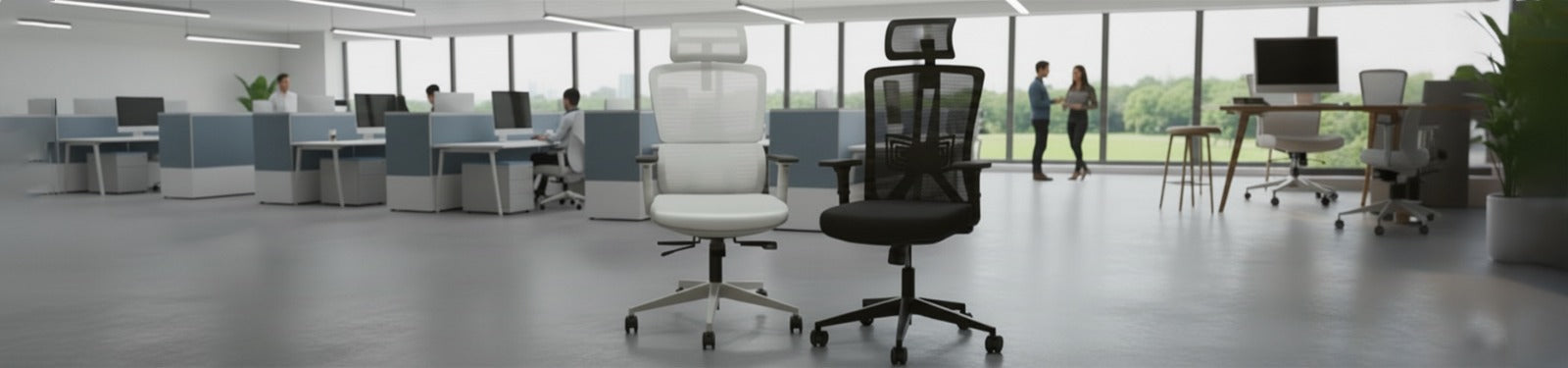
It’s not just what you sit on. It’s how it supports you.
Discomfort doesn’t always announce itself loudly. Sometimes, it creeps in as a dull ache, a slight shift in your seat, or the fatigue that lingers long after the day ends. And often, the chair beneath you is the silent cause. When most people think of comfort, they imagine plush cushions or soft padding. But comfort is not about how soft a seat feels for five minutes. It’s about how your body feels after five hours. So what really makes an ergonomic office chair truly comfortable?
1. Support Comes First
Comfort doesn’t mean sinking into softness. It means being supported where your body needs it most. A well-designed ergonomic chair evenly distributes your weight, relieving pressure on the thighs and hips while keeping the spine aligned. Too soft, and your posture collapses. Too firm, and your muscles tense in resistance. The Aura – Designed for Ease is crafted with this balance in mind. Its high-resilience cushion and breathable mesh back support your body throughout the day, offering ease without excess.
2. The Shape Beneath You Matters
An often overlooked element of comfort is seat geometry. Too deep, and you lean back awkwardly. Too shallow, and your legs are left unsupported. A contoured seat gently lifts under the thighs, encouraging circulation while grounding the hips. The Maestro – Composed for Spinal Harmony embodies this approach. Its precision-engineered seat encourages natural posture and relieves pressure points — ideal for focused work sessions that stretch beyond a typical hour.
3. Breathability Changes Everything
Heat and discomfort go hand in hand. Materials that trap warmth and moisture make long hours feel longer. Breathable mesh fabrics promote airflow, reducing sweat and keeping you comfortable as you move through your day. Bezomè chairs are built with ventilated backrests and materials that allow your body to breathe, not just sit. It’s the difference between feeling stuck and feeling supported.
4. Comfort Is Movement, Not Rigidity
Stillness is rarely natural. Your body wants to adjust, shift, recline. A supportive chair responds to these micro-movements — not with resistance, but with grace. Recline mechanisms that move with you encourage circulation, relieve pressure, and reduce fatigue. Bezomè chairs feature recline systems that respond to your posture, not confine it. They let you stay engaged in your work while allowing your body the quiet freedom to move.
5. Confidence in the Build
Comfort is not just physical — it’s also emotional. A chair that creaks, sinks, or wobbles creates unease. Over time, this sense of instability leads to tension, even if you can’t always name it. Bezomè chairs are built with durable, tested materials. Their quiet stability allows you to focus on what matters, not second-guess your support.
In the End, Comfort Is an Experience
It’s more than a feeling in the moment. It’s the absence of strain, the presence of ease, and the subtle alignment between your body and the space you work in. Because true ergonomic comfort doesn’t demand your attention. It gives it back to you.


